If you’ve scrolled past Our Sticky Love on Netflix and thought the title sounded a little… off, you’re not alone. A quick look at the original Korean title, 이런 엿같은 사랑 (pronounced ireon yeotgateun sarang), tells a different story. Translated literally, it’s closer to “This Shitty Love” — a title with a lot more bite than the sanitized English version Netflix went with.
That gap between the two titles is a small thing, but it’s also a pretty good entry point into this show. Our Sticky Love is a drama that’s funnier, messier, and more culturally loaded than its polished English packaging suggests. I watched the whole run, and I want to talk about why it worked for me, what makes it worth a watch if you’re new to Korean dramas, and one very real controversy that erupted around it in Korea — one that says a lot about how deeply history still shapes everyday life here.
What “Our Sticky Love” Is Actually About
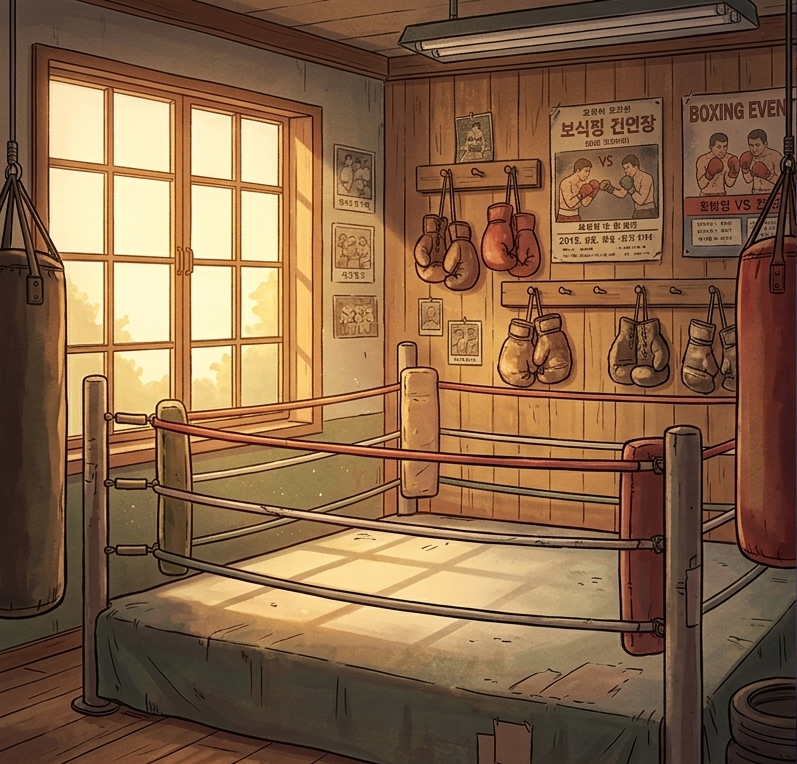
The setup: Go Eun-sae is an ambitious prosecutor working a case against a powerful crime syndicate when a mysterious incident wipes out her memory. She wakes up in a small rural village with no idea who she is — no name, no job, no past. The first face she sees belongs to Jang Tae-ha, a former boxer turned small-town boxing coach, who calmly informs her that he’s her boyfriend.
He isn’t. Not exactly. Tae-ha recognizes Eun-sae as his first love from years earlier, and rather than explain the complicated (and dangerous) truth, he decides the simplest way to protect her from the syndicate hunting her is to let her believe they’re already a couple. So the two end up living together, and what starts as a lie of convenience slowly turns into something real.
It’s directed by Kim Jang-han, who also worked on My Demon, and it stars Jung Hae-in as Tae-ha and Ha Young as Eun-sae. If you’ve seen Jung Hae-in in anything before, you know he has a specific gift for playing quietly intense men who look like they’re one bad day away from either crying or throwing a punch — and this role leans into that.
What Actually Worked For Me
The chemistry. This is the thing that carries the whole show, honestly. Jung Hae-in and Ha Young don’t play the “fake relationship” trope the way a lot of K-dramas do, where the tension feels manufactured just to stretch out sixteen episodes. Instead, there’s a lived-in quality to their scenes together — small glances, awkward domestic moments, the kind of chemistry that makes you believe two people could fall for each other twice, in two completely different circumstances. Tae-ha’s protectiveness never tips into possessiveness, and Eun-sae’s amnesia never turns her into a passive character waiting to be rescued. She’s sharp and suspicious of him even while she’s falling for him, which keeps the dynamic from getting stale.
The comedy. The setting itself — a sleepy village that seems to run on rumor and taffy production, if that gives you a sense of the vibe — gives the show room to be genuinely funny in a way that a lot of higher-stakes K-dramas don’t allow themselves to be. The side characters, particularly the older village residents who are 100% convinced Tae-ha’s fake relationship is real and start planning accordingly, are doing a lot of the comedic heavy lifting. It’s the kind of humor that sneaks up on you between more serious plot beats about the syndicate and Eun-sae’s buried memories.
Where the show is a little less consistent is in its tonal shifts — it swings between village rom-com and organized crime thriller more abruptly than I’d like, and the mystery-of-the-week structure around Eun-sae’s memory loss occasionally feels like it’s stalling rather than building. But the character work is strong enough that I stayed invested even during the slower stretches.
Who Should Watch This
If you’re new to Korean dramas and want something that isn’t a sixteen-hour emotional gauntlet, this is a solid entry point — it’s a rom-com first, with just enough thriller elements to keep things moving. If you already know Jung Hae-in from something like Snowdrop or A Piece of Your Mind, this is a good showcase for his range between vulnerability and quiet menace. And if amnesia plots are your thing (a very well-worn K-drama trope, for better or worse), this is one of the more character-driven takes on it — Eun-sae’s memory loss isn’t just a device to manufacture drama, it’s actually tied into the mystery of who she used to be and why the syndicate wants her.
The Controversy You Should Know About If You’re New to Korean Culture
Here’s where I want to slow down, because this part of the story isn’t really about the drama itself — it’s about something that happened around it, and it tells you a lot about how Korea relates to its own history.
Shortly after the show premiered, Ha Young appeared on a KBS variety program and talked proudly about her family background, describing her family as being doctors for four generations. It was meant as a lighthearted, “aren’t I lucky” kind of comment. Instead, it set off a firestorm.
Online users quickly connected the dots on her family history and found that her great-grandfather, Ahn Sang-ho, had reportedly been listed as a board member of an organization called Daejeong Chinmokhoe — a group formed during the Japanese colonial occupation of Korea that promoted cooperation between Korea and imperial Japan. The Center for Historical Truth and Justice, a Korean research organization that documents pro-Japanese collaboration during the colonial period, later issued a formal statement saying the evidence of her great-grandfather’s collaboration was clear, even though he hadn’t been included in their original published registry (they noted that this was due to the evidentiary standards at the time of publication, not evidence of innocence).
The backlash was fast and severe. Brands that had used Ha Young in advertising, including Samsung Electronics, pulled or hid the promotional content. The variety show appearance where she’d made the original comment was taken down. Interviews for Our Sticky Love were cancelled. Ha Young posted a handwritten apology on social media, saying she sincerely apologized “as a descendant,” but the criticism didn’t really stop there.
Why does this matter so much in Korea?
If you didn’t grow up here, this level of reaction can seem baffling — why would anyone be held responsible for something their great-grandfather did, decades before they were even born?
The short answer is that Korea’s 35 years under Japanese colonial rule (1910–1945) left a wound that’s still very present in the national conversation, and chinilpa — a term that literally means “pro-Japan faction,” referring to Koreans who collaborated with the colonial government — remains one of the most loaded labels in Korean public life. Collaborators in that era often profited enormously while their fellow Koreans suffered under forced labor, cultural suppression, and violent political repression. Because many of those families retained their wealth and social status after liberation, “chinilpa ancestry” has become shorthand for a kind of inherited, unearned privilege that critics argue was never properly accounted for.
That’s part of why the actual trigger for the backlash wasn’t the ancestry itself — it was the framing. Ha Young hadn’t brought up her family history to address it or contextualize it; she’d brought it up as something to feel proud of, without acknowledging the more complicated parts of that legacy. Critics, including the historical research group itself, made a point of saying that the core issue wasn’t that she has a collaborator in her family tree (a lot of Korean families do, whether they know it or not), but that she talked about her family’s status with zero awareness of where some of that status may have come from.
There’s also a genuinely interesting international wrinkle here: a conservative Japanese outlet ran a piece criticizing what it called Korea’s culture of punishing the descendants of collaborators indefinitely, pointing to a pattern of similar controversies involving other celebrities over the years. It’s a useful reminder that how a story like this gets read depends a lot on which side of the relationship — and which country’s history textbooks — you grew up with.
For what it’s worth, none of this is about assigning you, the reader, an opinion on who’s right. It’s genuinely a complicated, ongoing conversation in Korean society about accountability, generational guilt, and how much of the past a country is willing to keep confronting. But if you’re watching Our Sticky Love and wondering why a lighthearted rom-com became a headline-generating controversy overnight, now you know the backstory — and honestly, understanding this kind of thing is part of what makes watching K-dramas as an outsider so interesting. The shows are rarely just the shows.
Final Take
Controversy aside, Our Sticky Love is a well-made, genuinely funny rom-com anchored by two leads with real chemistry, even if the tonal balance between “cozy village romance” and “crime syndicate thriller” doesn’t always land perfectly. It’s currently one of the highest-ranked Korean dramas on Netflix’s global chart, and it’s easy to see why — it hits the sweet spot of accessible and well-acted that tends to travel well outside Korea.
Whether or not the offscreen drama affects how you watch it is, honestly, up to you. But either way, it’s a good example of something worth remembering with K-dramas: the story on screen is often only half of what’s actually going on.
Have you watched Our Sticky Love? Let me know what you thought in the comments — and if you’re new to Korean dramas and want more recommendations, check out our K-Drama & Entertainment section for more.